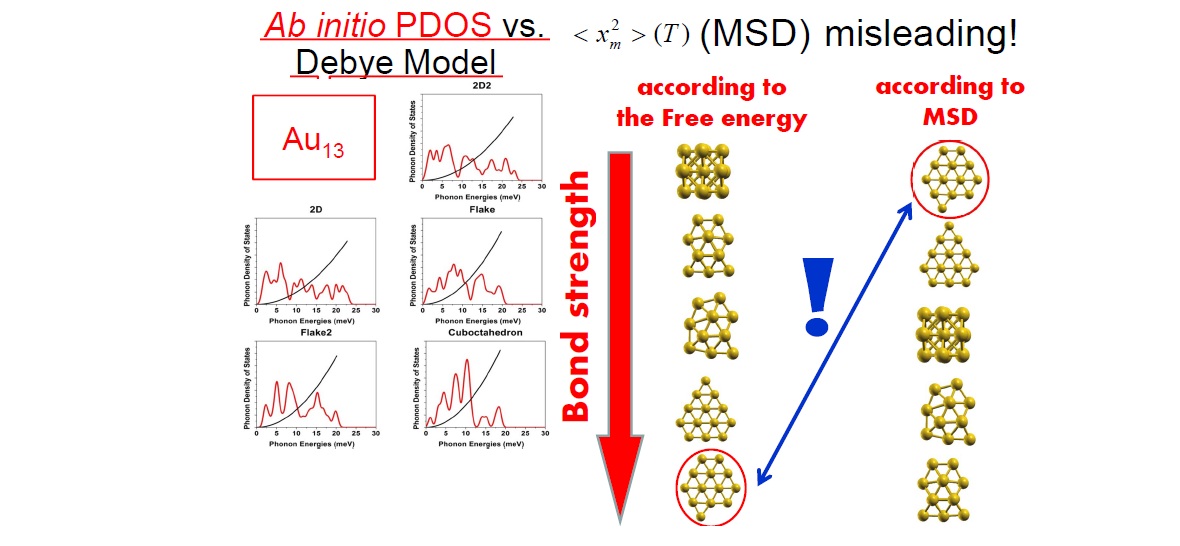
Revealing the meaninglessness and bond-strength misrepresentation resulted from extrapolating the Debye-temperature concept to nanoparticles

[J. Phys.: Condens. Matter 24, 104026 (2012)] Phenomena at the nano-scale are subjects of wide interest because of their fundamental and technological significance. Structure characterization, stability and thermal properties of nanoparticles (NPs) are, in their own right, topics of intensive research, and today’s physicists use state-of-the-art experimental and computational techniques to unravel them. In reference [1], […]
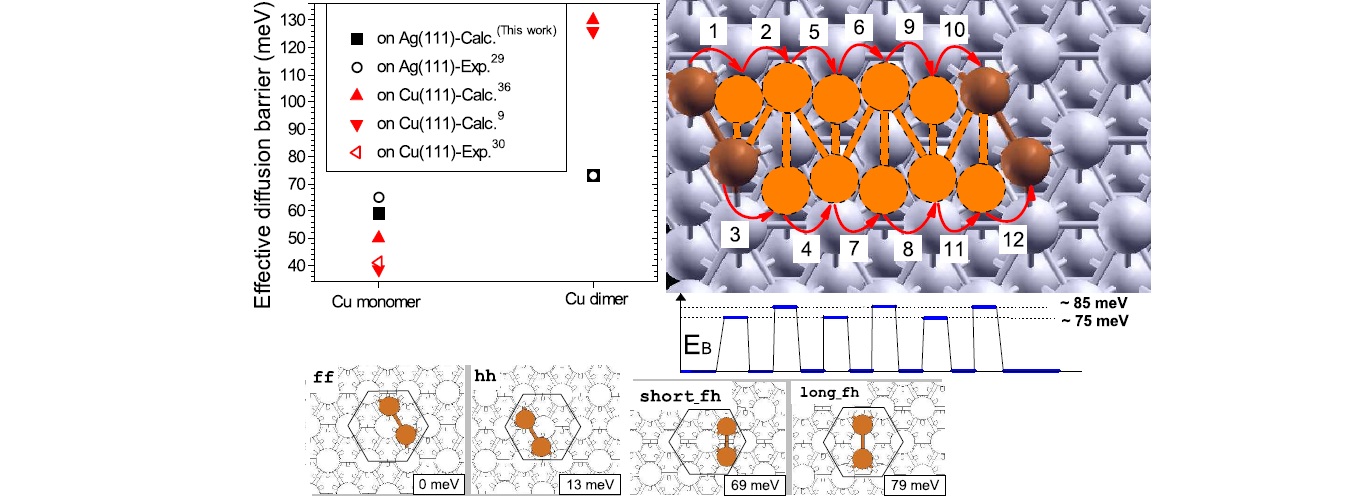
On the factors causing the high mobility of Cu dimers on Ag(111): Bond-strength hierarchy, novel configurations and diffusion processes

[Phys. Rev. B 82, 085405 (2010)] Understanding materials growth has been a subject of interest already for several decades. The dynamical processes involved in these phenomena in fact bear importance for several aspects of material science; metal oxidation rates and functionality (catalytic, magnetic, etc.) of supported heterogeneous materials when complex structural pattern formation become important, for […]

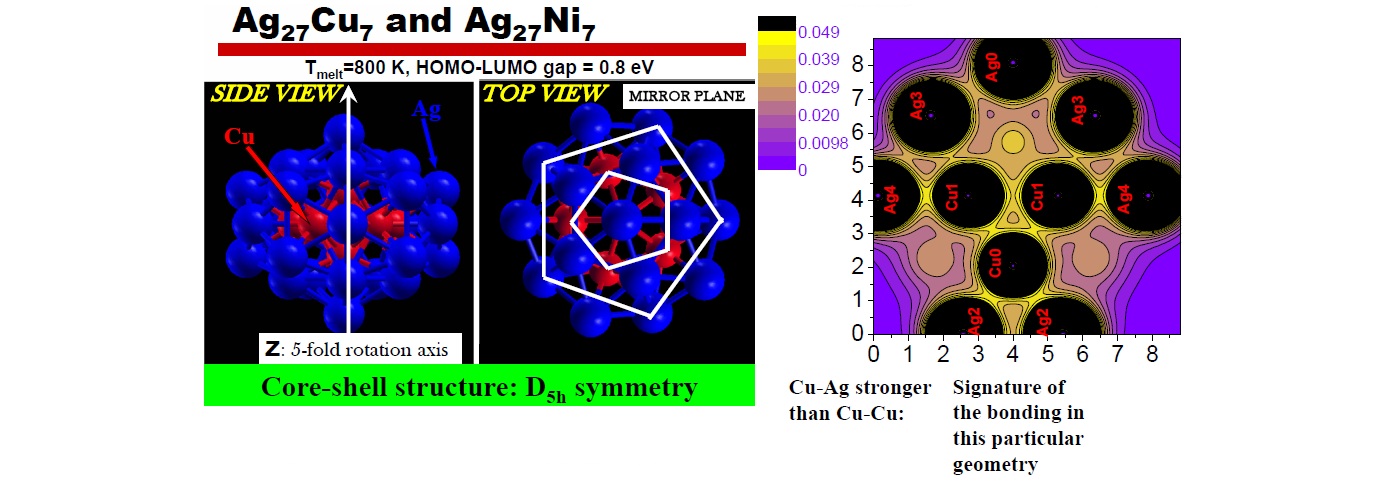
Revealing the factors that stabilize core-shell nanoparticles: The case of Ag27Cu7

[Phys. Rev. B 77, 195404 (2008) and Contemporary Physics: Proceedings of the International Symposium by Jamil Aslam, Faheem Hussain, Riazuddin; Published by World Scientific (2008)] It is quite clear now that small nanoclusters necessarily have physical and chemical attributes that are distinct from those of their pure bulk counterparts, features that are of course attractive to achieve specific […]

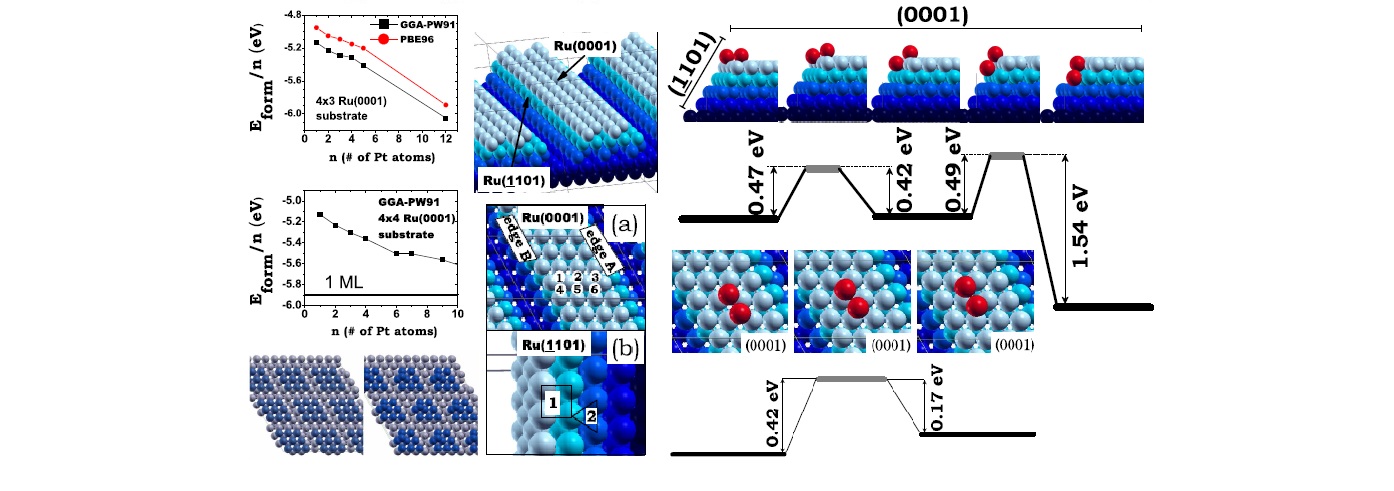
Origin of the high CO tolerance of Pt/Ru nano-catalysts

[Phys. Rev. B 78, 195417 (2008) and  J. Phys.: Condens. Matter 21, 474226 (2009)] This work focuses on understanding the performance of clean energy conversion nanodevices, proton exchange membrane fuel cells (PEMFCs) in particular. Operation of the anode in these devices consists of splitting hydrogen molecules into protons and electrons and Pt atoms on the anode catalyze such process. […]

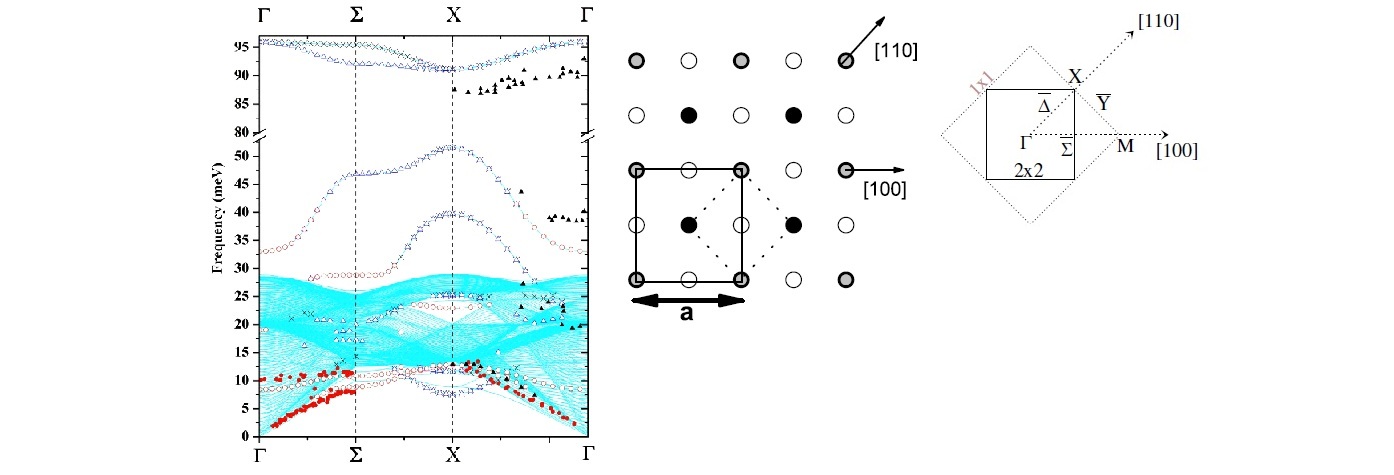
The c(2×2)-N phase on Cu(001): Structure and stress-driven self-ordering investigation via its vibrational dynamics

[Phys. Rev. B 81, 115465 (2010)] Controlling and exploiting self-ordering of materials requires us to understand the structure at the atomic level and the mechanism that drives the nanoscale self-assembling. The result of adsorbing nitrogen on the Cu(001) surface constitutes one example of nanoscale self-ordering as it forms squared 6×6 nm2 N-patches on top of the […]