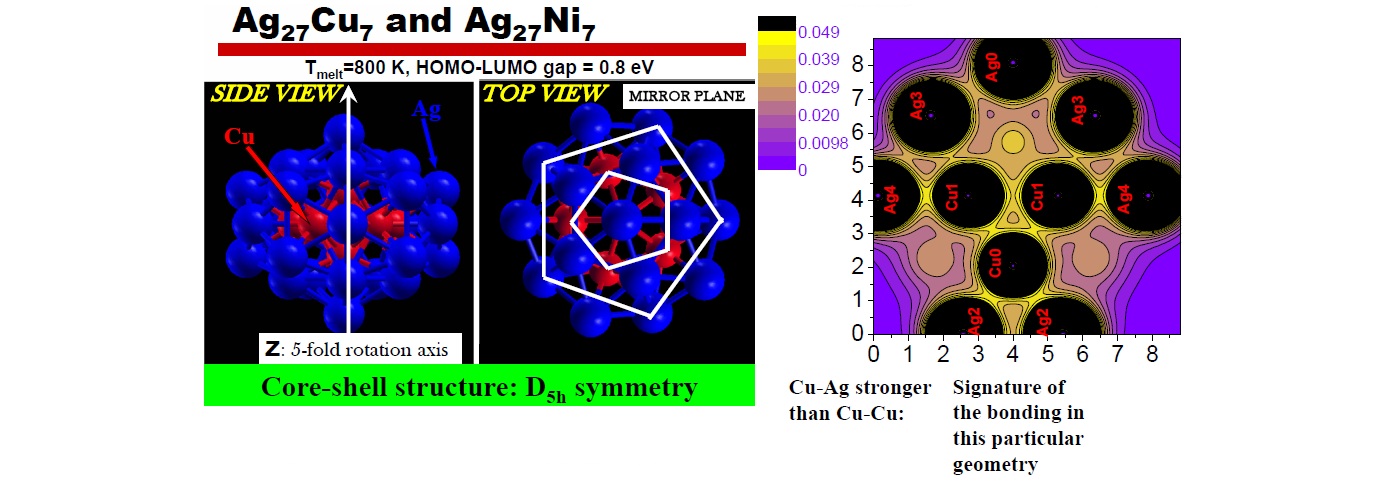
Revealing the factors that stabilize core-shell nanoparticles: The case of Ag27Cu7

[Phys. Rev. B 77, 195404 (2008) and Contemporary Physics: Proceedings of the International Symposium by Jamil Aslam, Faheem Hussain, Riazuddin; Published by World Scientific (2008)] It is quite clear now that small nanoclusters necessarily have physical and chemical attributes that are distinct from those of their pure bulk counterparts, features that are of course attractive to achieve specific […]
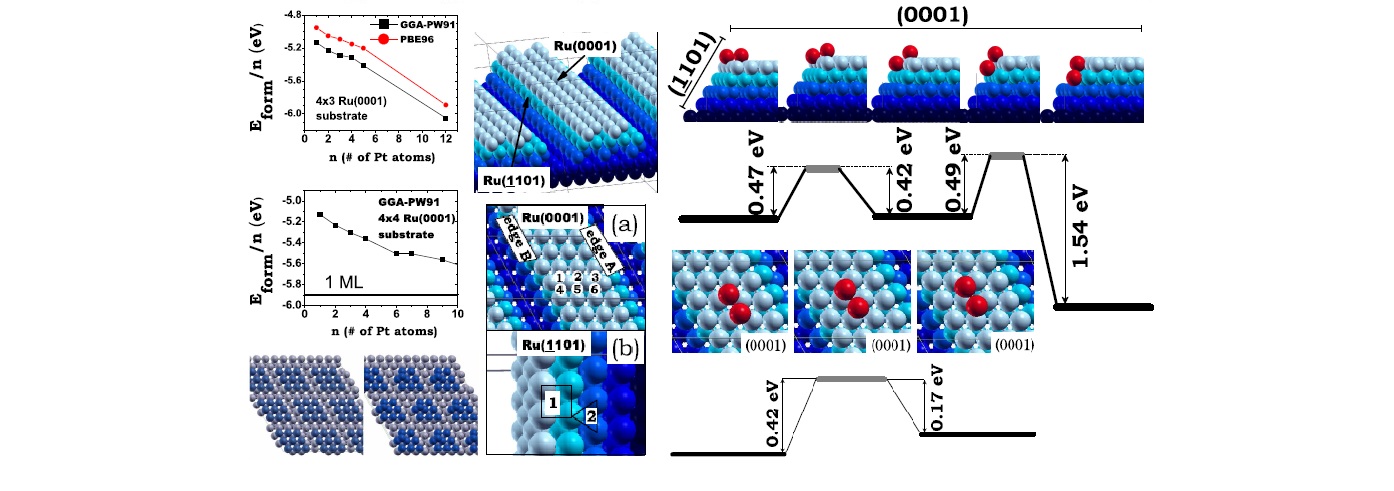
Origin of the high CO tolerance of Pt/Ru nano-catalysts

[Phys. Rev. B 78, 195417 (2008) and  J. Phys.: Condens. Matter 21, 474226 (2009)] This work focuses on understanding the performance of clean energy conversion nanodevices, proton exchange membrane fuel cells (PEMFCs) in particular. Operation of the anode in these devices consists of splitting hydrogen molecules into protons and electrons and Pt atoms on the anode catalyze such process. […]

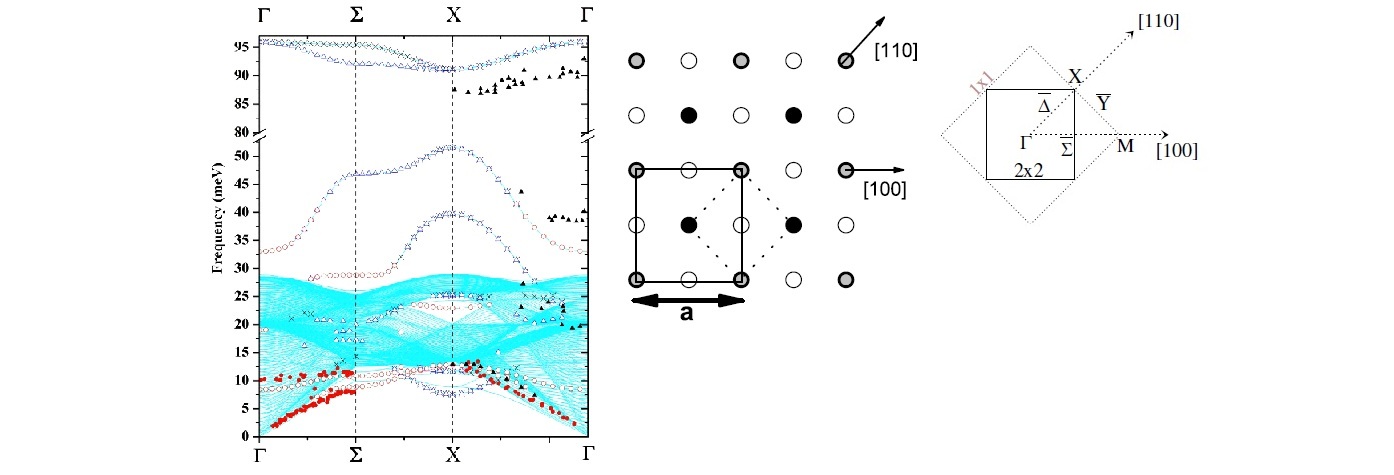
The c(2×2)-N phase on Cu(001): Structure and stress-driven self-ordering investigation via its vibrational dynamics

[Phys. Rev. B 81, 115465 (2010)] Controlling and exploiting self-ordering of materials requires us to understand the structure at the atomic level and the mechanism that drives the nanoscale self-assembling. The result of adsorbing nitrogen on the Cu(001) surface constitutes one example of nanoscale self-ordering as it forms squared 6×6 nm2 N-patches on top of the […]

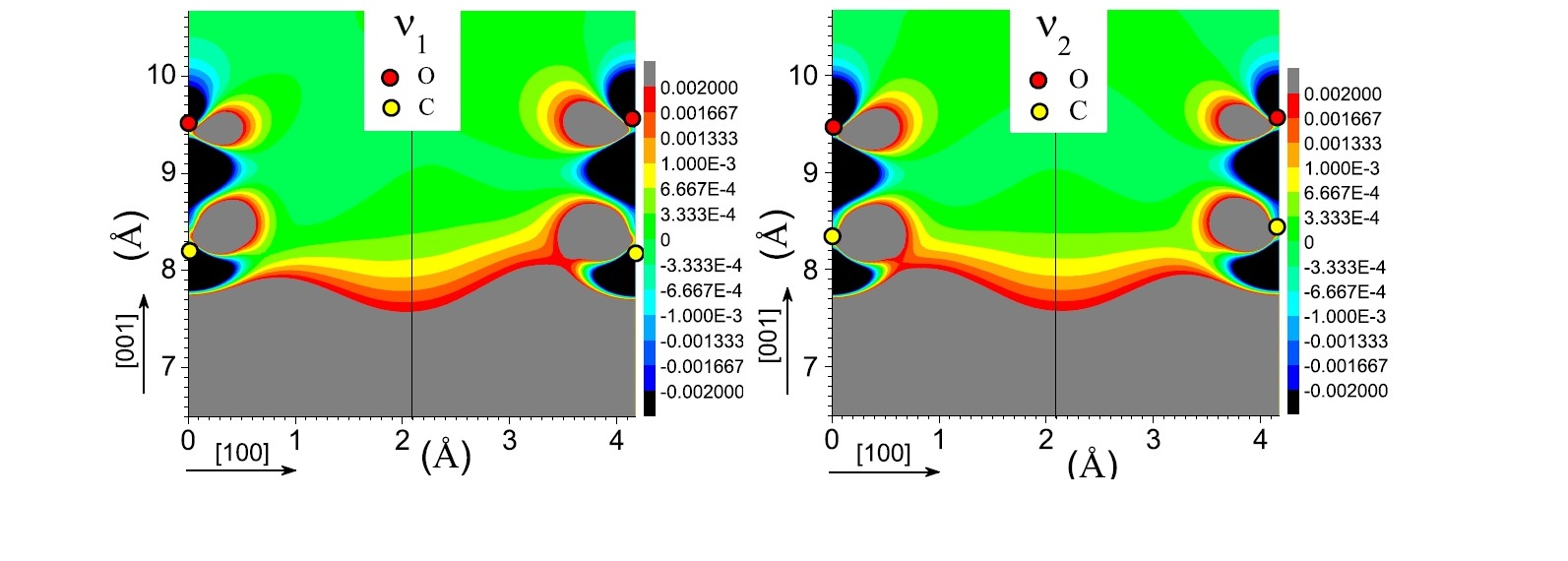
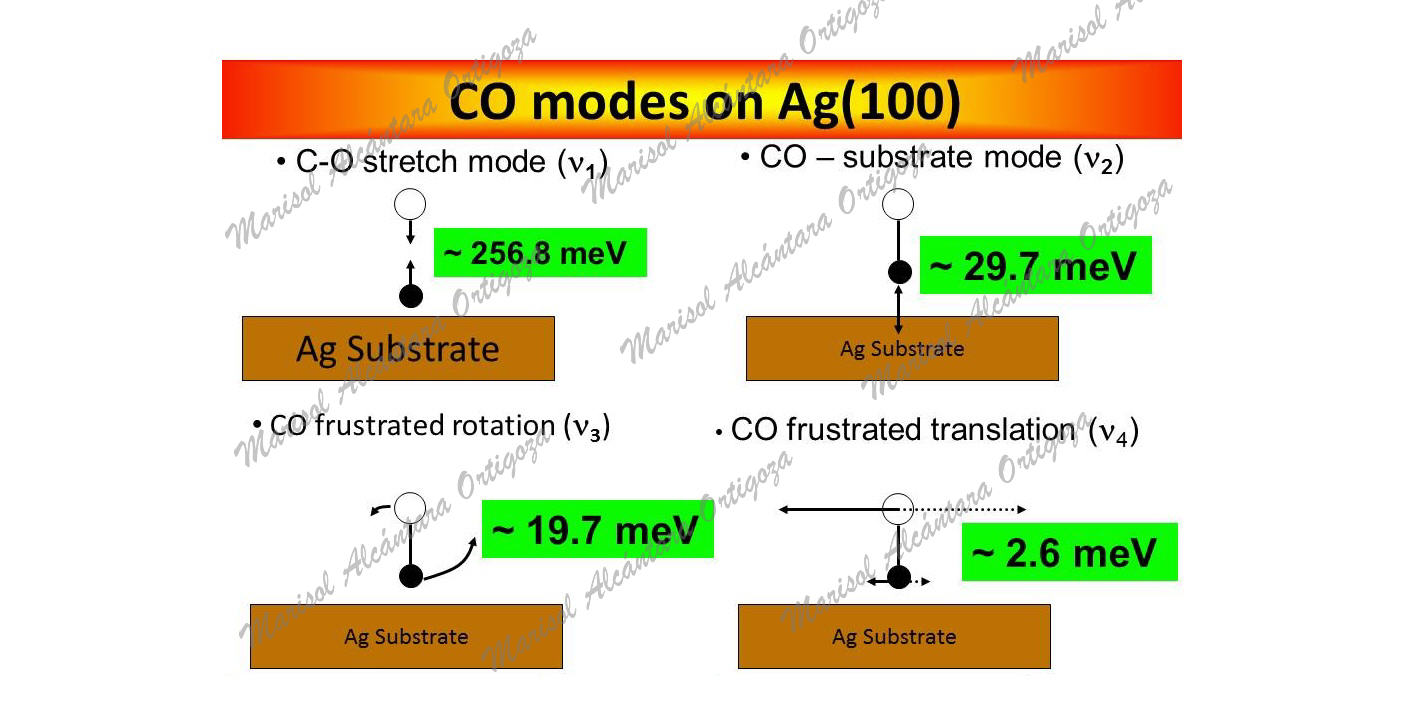
New answers to old questions Part III: Nature of the binding of CO on Ag(001) and surface mediated intermolecular coupling

[J. Phys. Chem. A, 115 (25), 7291 (2011)] The coupling between molecules and metallic surfaces has attracted much interest in the last three decades because of the insight it provides into chemisorption and diffusion processes. The interactions present when carbon monoxide (CO) is absorbed on metals surfaces are of particular importance since they influence chemical reactions of […]